
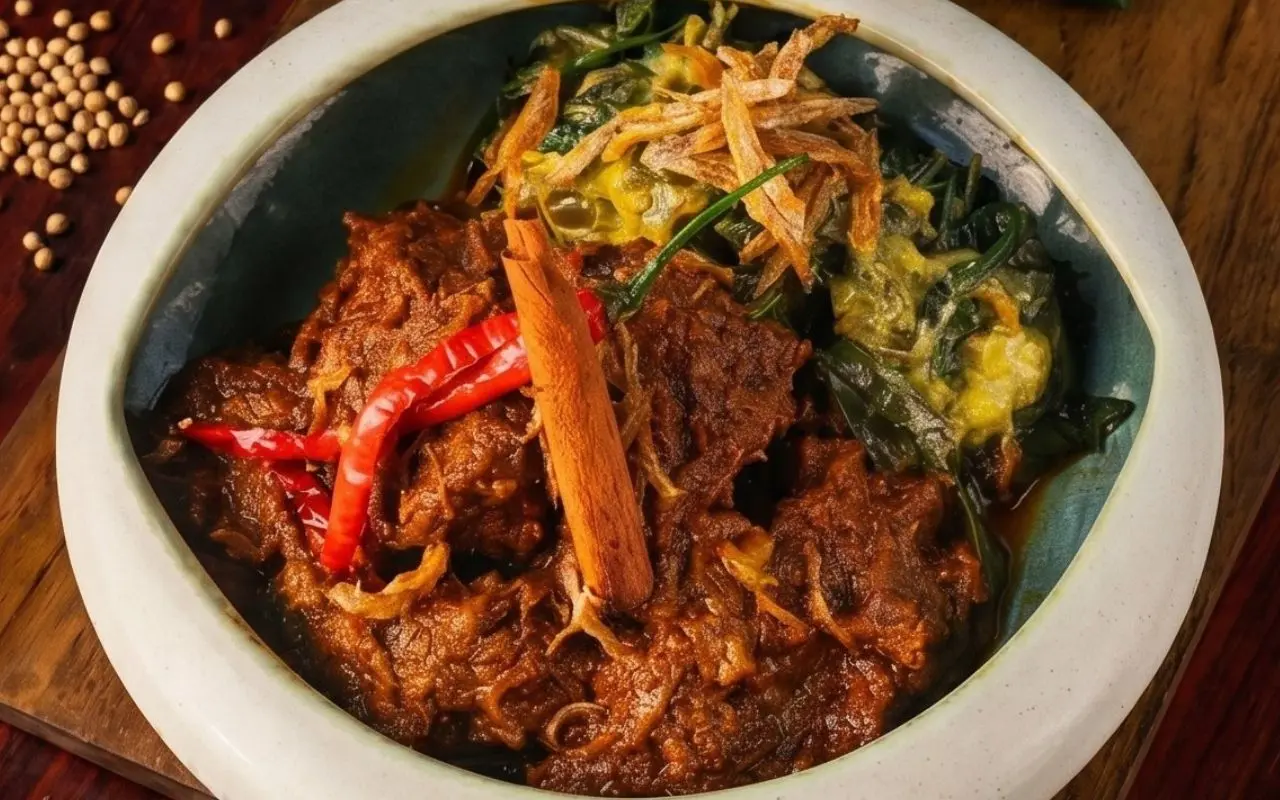
SLOW-COOKED BEEF RENDANG
Rendang is one of the dishes that has followed Will Meyrick for decades. After more than 30 years of travelling through Indonesia, Sumatra remains a deep reference point, not for restaurants, but for home kitchens. Rendang is never one fixed recipe. Every family adjusts it. Every ibu-ibu has her own tricks, when to add the leaves, how far to reduce, when the oil is right, how dark is dark enough. That is the point. The dish is famous, but it still belongs to the people who cook it slowly, patiently, and slightly differently every time.
This version is built for a home kitchen, with the same core principles: proper paste, gentle heat, constant attention, and enough time for the coconut to turn from sauce into a dark, clinging glaze.
WILL MEYRICK'S RECIPE
Serves: 4
Preparation time: About 40 minutes
Cooking time: About 3 to 4 hours
THE STORY BEHIND THE RECIPE
Will Meyrick's final stop in Kampong Glam takes him to Sabar Menanti — an 80-year-old, third-generation Padang restaurant that traces its roots directly back to West Sumatra. Now run by the founder's son, Sabar Menanti is a living example of the Minangkabau tradition of merantau — the cultural practice of leaving Padang to explore the world — that gave Singapore (and the world) its beloved Nasi Padang restaurants.
▶ WATCH THE SERIES ON WMTV

INGREDIENTS
For the rendang paste
30 g shallots
30 g garlic
25 g galangal
10 g ginger
60 g red curly chilli
For the rendang spice mix
1 g star anise
0.4 g nutmeg
4 g cinnamon stick
18 g coriander seeds
1 g dry long pepper
3.5 g fennel seeds
3.5 g white cardamom
3.5 g cumin seeds
For the rendang
1 kg beef brisket, cut into large cubes
30 ml neutral oil
2 lemongrass stalks, bruised
2 salam leaves (Indonesian bay leaves)
1 g star anise
2 g cinnamon stick
2 g asam kandis
500 ml coconut milk
5 g roasted grated coconut, blended
6 g rendang spice mix
25 g gula Jawa (palm sugar), grated
1 turmeric leaf, tied into a knot, optional
Salt, to taste
USEFUL SHORTCUTS for home cooks
If salam leaves, turmeric leaf or asam kandis are not available, the rendang can still be made. Use a bay leaf in place of salam and a small squeeze of lime at the end to lift the flavour if asam kandis is missing. Turmeric leaf adds fragrance but is optional.
If roasted grated coconut is not available, toast desiccated coconut in a dry pan until golden, then blend or crush to a coarse powder.
For an easier weeknight version, rendang improves after resting. Make it a day ahead, chill, lift any excess fat, then reheat gently.
If coconut milk splits, keep going. Rendang is cooked long enough that it will come back together as it reduces, as long as the heat stays low and it is stirred regularly.
METHOD
1.Make the rendang paste
Blend the shallots, garlic, galangal, ginger and red curly chilli into a smooth paste. Add a small splash of water only if needed to help it move.
2.Make the rendang spice mix
Dry roast the whole spices in a pan over medium heat until aromatic. Cool briefly, then grind to a fine powder. Measure out 6 g for the rendang and store the rest in an airtight jar.
3.Cook the paste
Heat the oil in a heavy pot over medium heat. Add the rendang paste and cook, stirring regularly, until fragrant and the oil begins to separate from the paste.
4.Add aromatics
Add the bruised lemongrass, salam leaves, star anise, cinnamon stick and asam kandis. Stir well to combine.
5.Add the beef
Add the beef and stir until fully coated. Cook for a few minutes until the surface colour changes.
6.Add coconut milk and simmer
Pour in the coconut milk and bring to a gentle simmer. Lower the heat and cook uncovered, stirring regularly to prevent sticking, as the liquid slowly reduces.
7.Season and reduce until dark
Add the rendang spice mix, palm sugar and roasted blended coconut. Continue cooking over low heat, stirring more frequently as it thickens, until the beef is tender and the sauce has reduced into a dark, glossy coating.
8.Finish
Add the turmeric leaf and cook for a few more minutes. Season with salt to taste. Remove the lemongrass, leaves and whole spices before serving if preferred.
To serve
Serve with steamed rice and something crisp on the side, such as cucumber, herbs or lightly pickled vegetables.