Balinese Stir-Fried Prawns
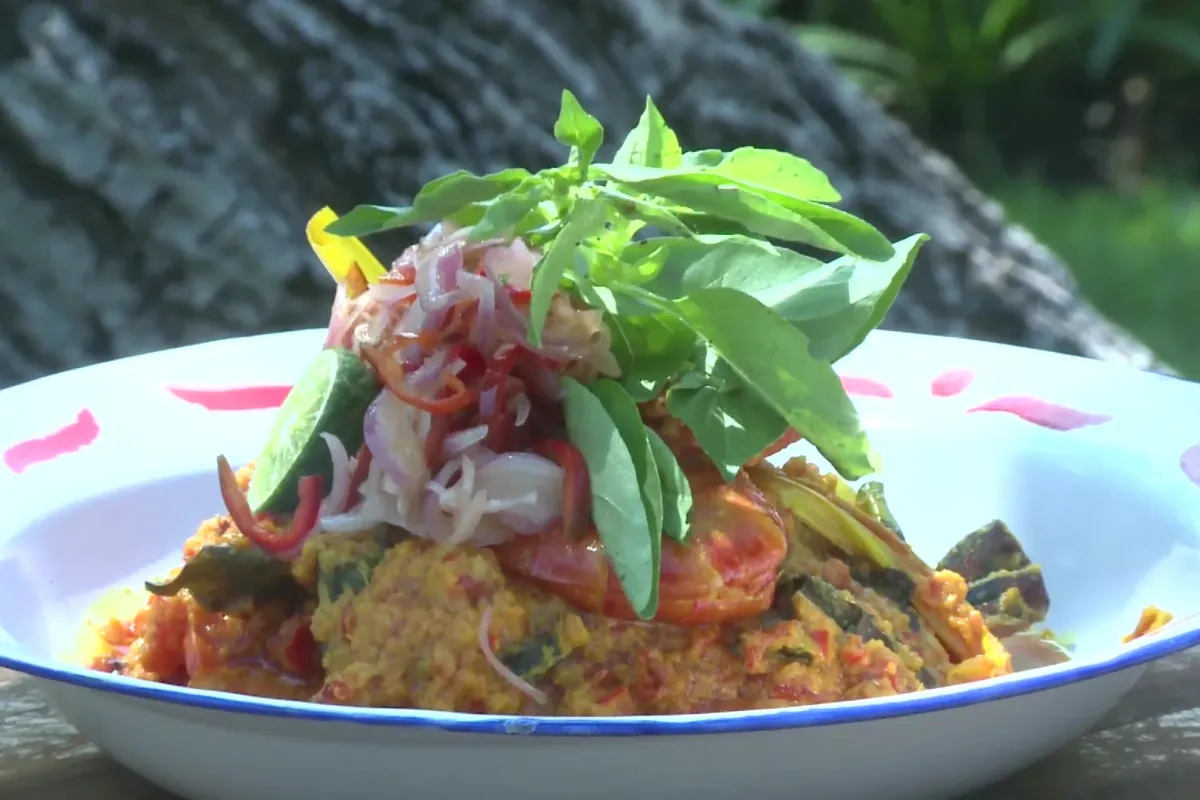
Udang goreng Bali is a dry, sambal-style prawn stir-fry: shell-on prawns in a red tomato and shrimp paste base, cooked until the coconut splits and the oil rises. Finish with lime and lemon basil.
Method
Make the paste
- Blend the red paste ingredients until smooth.
Cook the paste and prawns
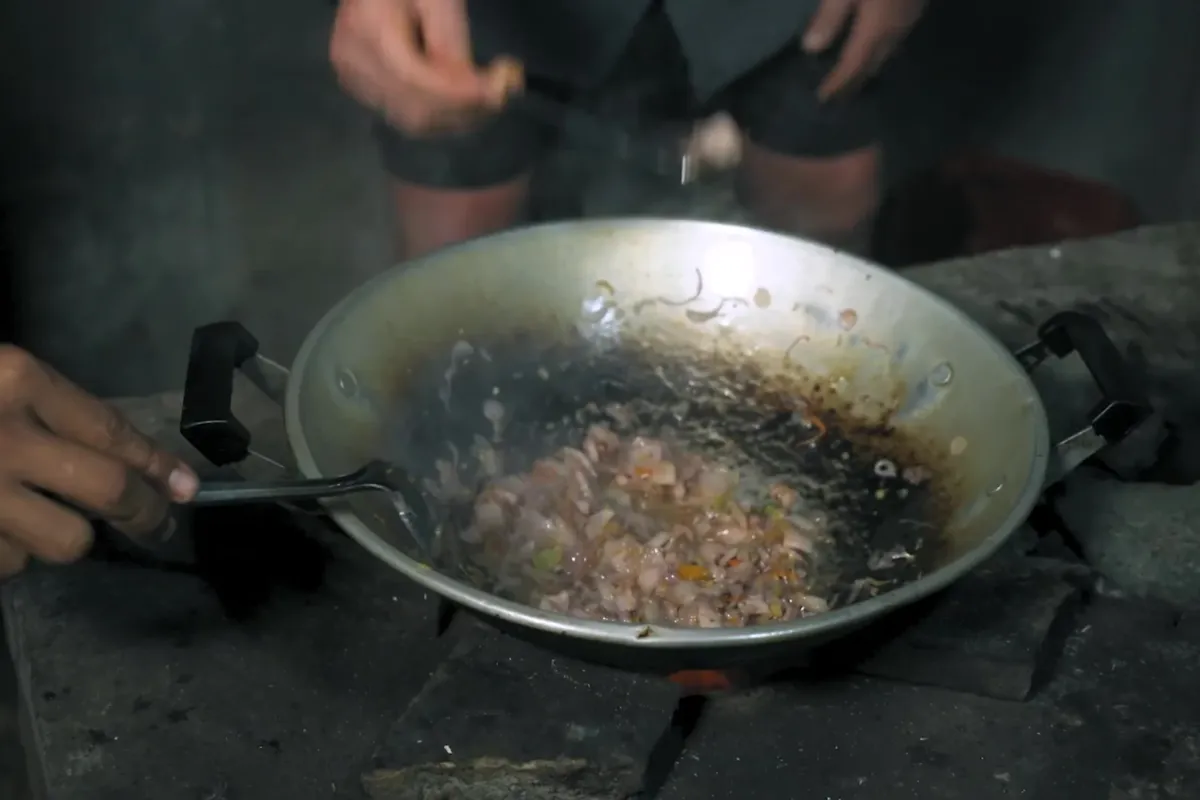
- Heat the oil in a wok over medium heat. Add the paste, tomato, lemongrass, salam leaves and lime leaves and stir for 5 minutes until fragrant and the oil begins to separate.
- Add the prawns and stir for about 2 minutes until they turn pink. Take them out so they do not overcook.
Reduce the sauce
- Pour in the coconut cream mixed with water. Simmer, stirring, until it reduces, the coconut splits and the oil rises to the top, about 8 to 10 minutes. The sauce should be thick and dry.
- Season with salt and add the lime juice.
Finish
- Return the prawns to the wok and toss for 1 minute to coat.
- Serve topped with lemon basil, with sambal matah and lemon on the side.
Tap a step to mark it done.
Useful shortcuts for home cooks
Cooking prawns in their shells and heads keeps them juicy and adds flavour.
Use thick canned coconut cream and dilute it: Will uses 1 part cream to 3 parts water, so it splits instead of staying heavy.
If you have no tamarind, lime juice at the end works, as Will does here.
The story behind the recipe
Will cooks udang goreng, Balinese stir-fried prawns, in a red paste of shallot, chilli, coriander seed, garlic, shrimp paste, candlenut, tomato, galangal, turmeric and ginger. He uses lime where tamarind is normally used.
He says prawns in Bali were traditionally fished from mangroves and shallow water, but today they are mostly farmed, and buying from responsible farms helps the farmers.
The prawns go in with the shell and head on for flavour, and come out before they overcook. The sauce reduces until the coconut splits and the oil rises, so the dish is dry and like a sambal, not saucy. It finishes with lime, lemon basil and a side of sambal matah.
Bali