Sambal Udang
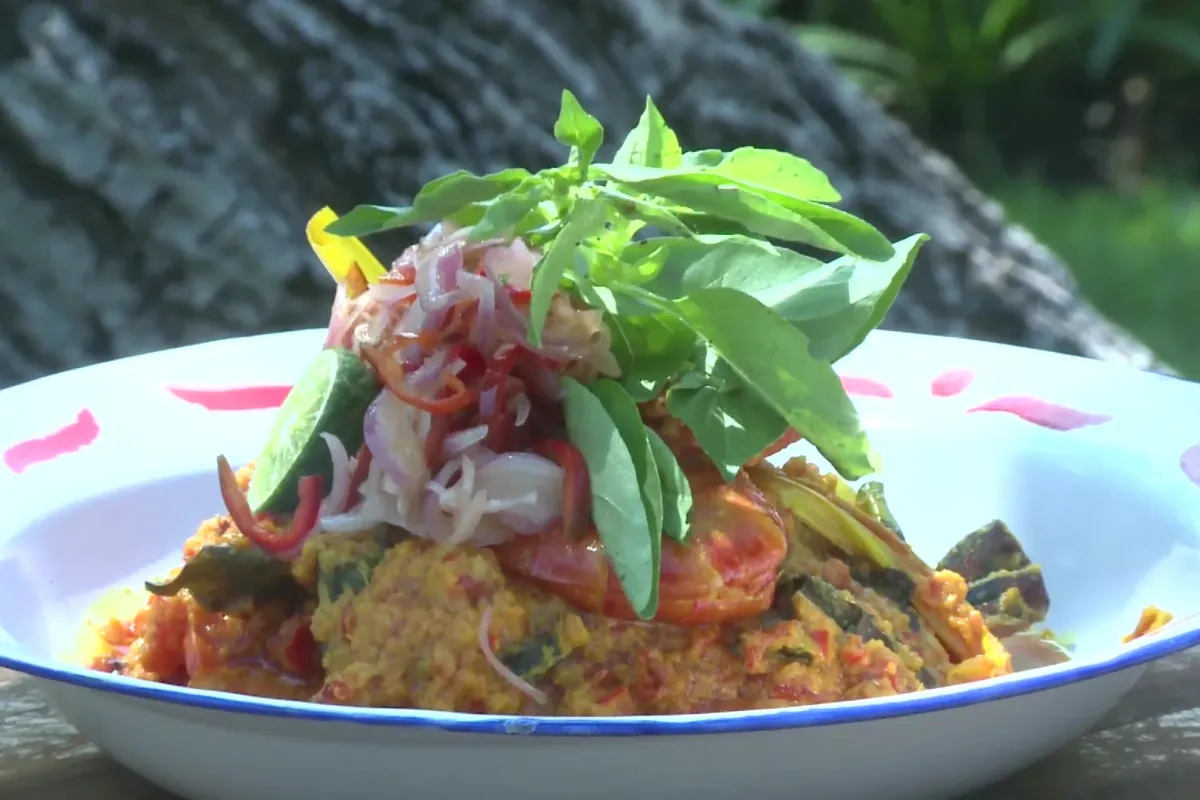
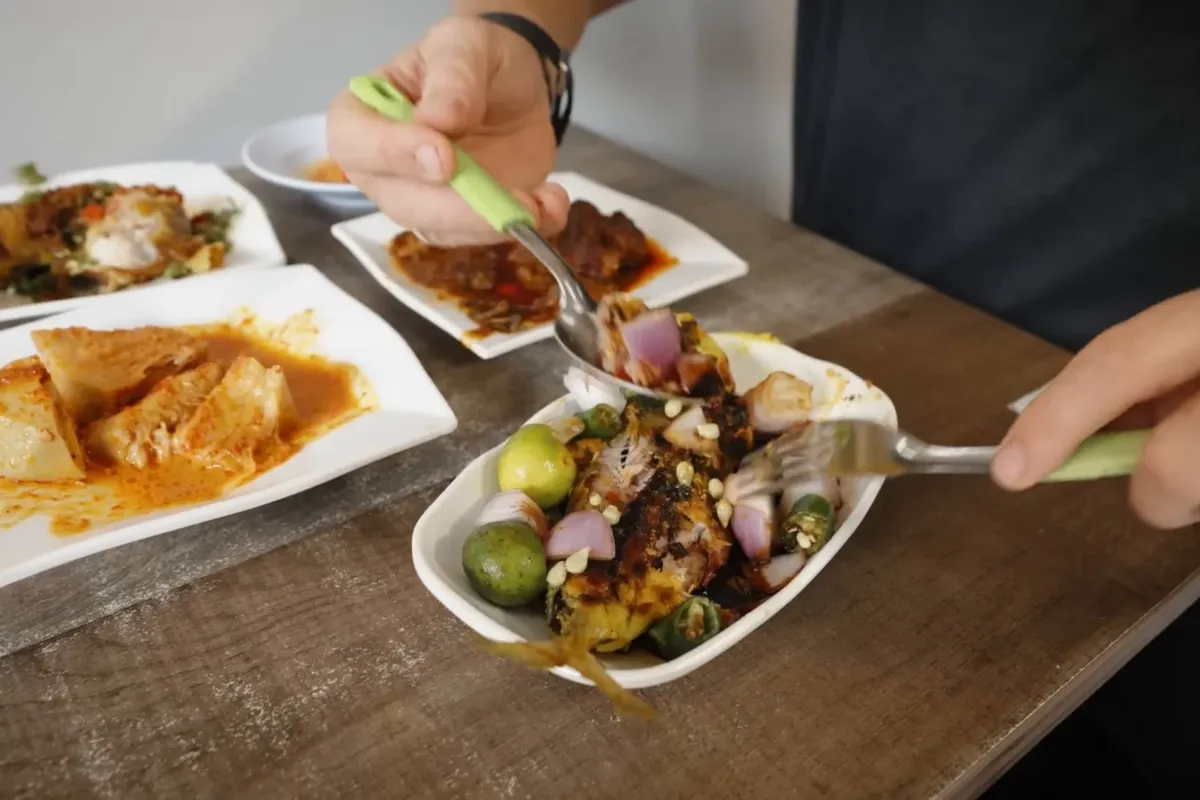
Sambal udang is prawns cooked in a red sambal built on chilli, shallot and toasted shrimp paste (terasi), with sliced onion and a touch of sweetness. It is a staple of Malay and Padang rice tables, here from Hj Maimunah in Singapore.
Method
Make the paste
- Toast the terasi in a dry pan for 1 minute until fragrant. Blend the chillies, shallots, garlic and terasi into a coarse paste.
Cook the sambal
- Heat the oil in a wok over medium heat. Fry the paste for 6 to 8 minutes, stirring often, until the raw smell is gone and the oil separates and turns red.
Add the prawns
- Stir in the sliced onion and cook for 2 minutes. Add the tamarind water and sugar, then the prawns.
Finish
- Cook for 3 to 4 minutes over medium-high heat, until the prawns are pink and curled and the sambal clings to them. Season with salt and serve with steamed rice.
Tap a step to mark it done.
Useful shortcuts for home cooks
Toast terasi in a dry pan with the window open. The smell is strong, but it is what makes the sambal.
Leave the seeds in the chillies for more heat, or use half curly chilli and half bird's eye.
Do not overcook the prawns. They go in for 3 to 4 minutes at the end.
The sambal paste keeps for 5 days in the fridge, so make a double batch.
The story behind the recipe
In episode 4 of his Singapore street food journey, Will visits Hj Maimunah, a Malay and Padang restaurant on the Michelin Bib Gourmand list since 2016. There is a long queue, and as Will says, it is all locals and no foreigners.
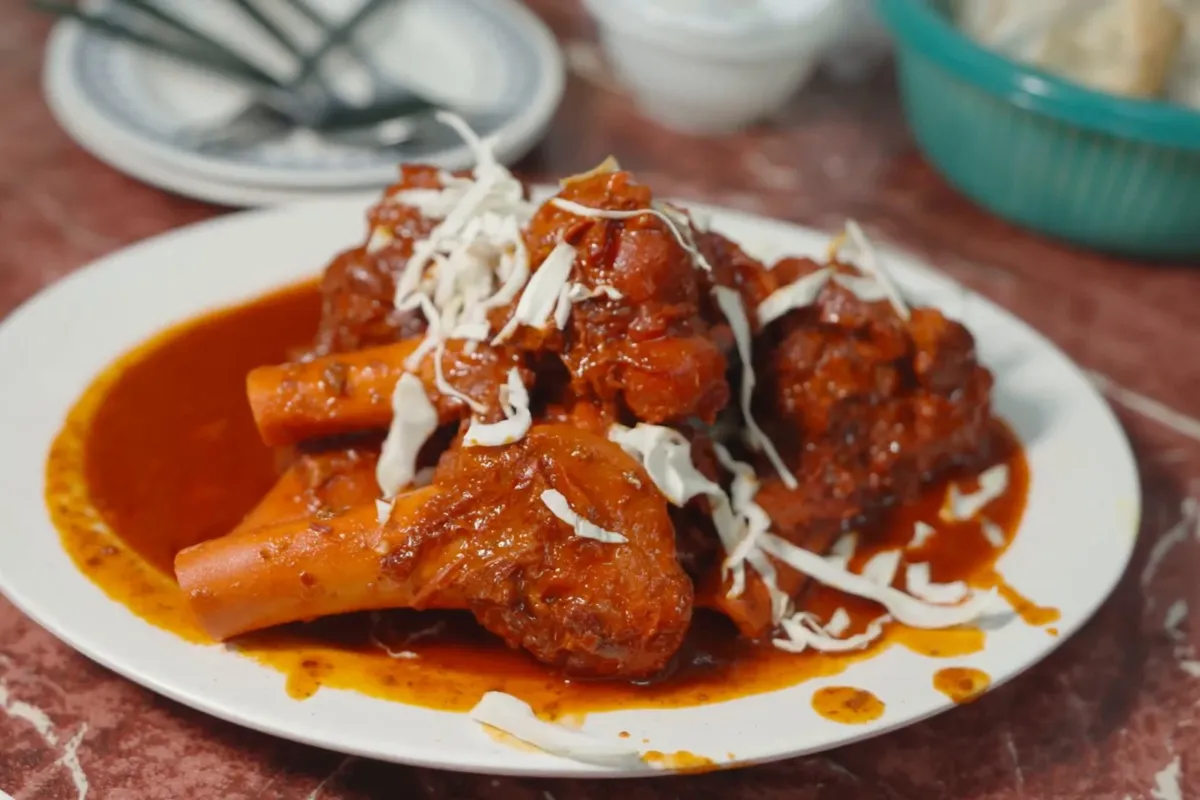
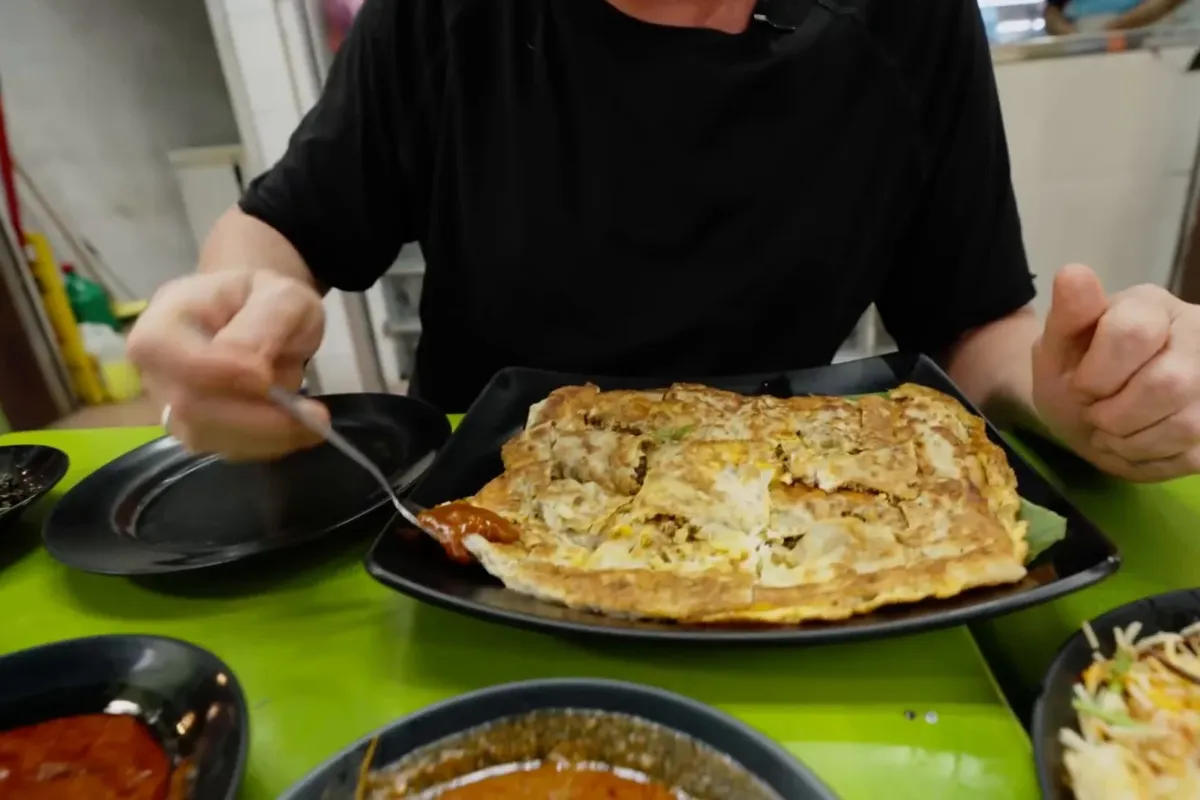
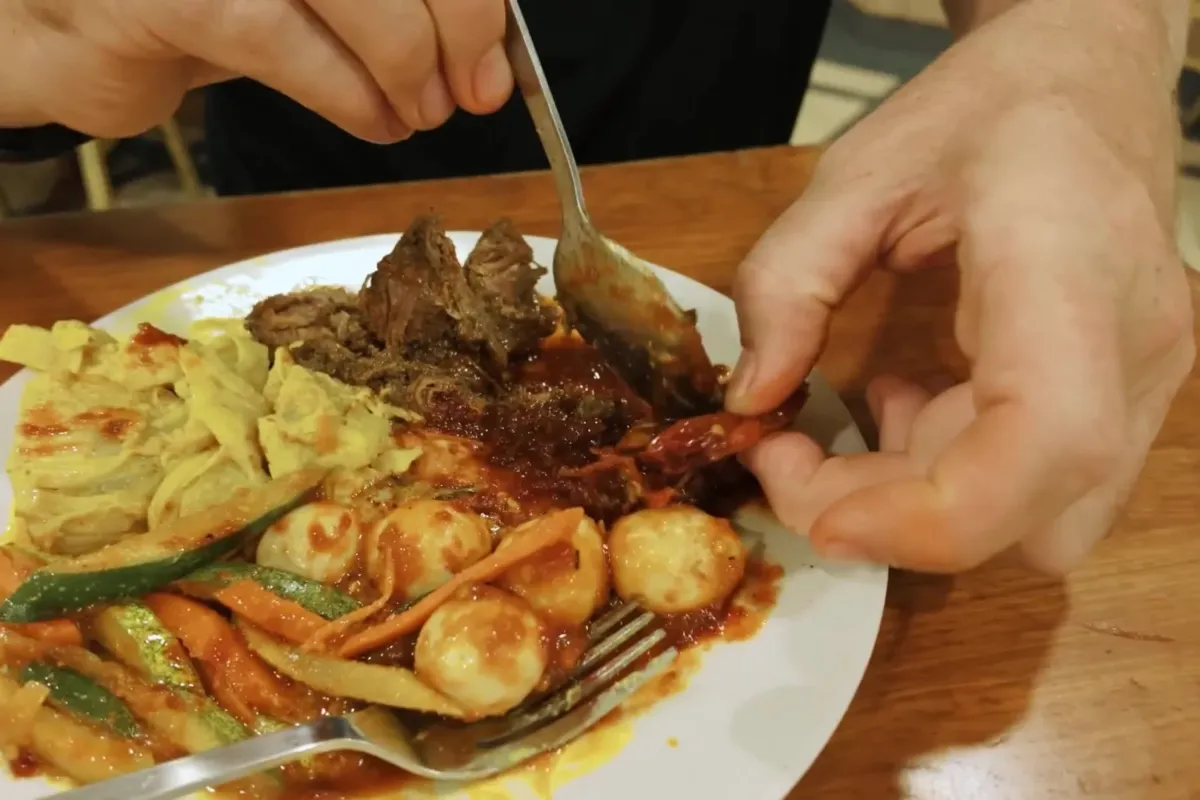
The spread has rendang, sambal udang, fried eggs with balado, acar, gulai nangka, babat and gulai babat, and grilled fish. Will says it is a real mix of Padang and Malay food, close to the cooking of Negeri Sembilan, which has strong ties with Sumatra and the Minangkabau people. He sees the same melting pot in Geylang: Chinese, Malay and Indian side by side.
On the sambal udang, he says it is basically a sambal terasi with onions, sweet and very good. The Malay rendang is lighter and less spicy than the Indonesian one. His verdict: Indonesia’s is better. His advice is to get there early.
Singapore